Top 10 Types of Geotextiles for Global Buyers

Geotextiles have moved from specialist construction materials to essential components in roads, railways, drainage systems, coastal works, and landfill engineering. Their core functions remain practical: separation, filtration, drainage, reinforcement, and erosion control. A woven polypropylene fabric may stabilize a weak subgrade, while a nonwoven polyester fabric can protect a drainage layer from clogging. The difference is visible on site. One fabric carries traffic stress; another lets water pass without allowing soil migration.

Market evidence supports this expanding role. Grand View Research reported strong growth in the global geotextiles market, driven by transport infrastructure, water management, and environmental protection projects. MarketsandMarkets also identified geosynthetics as a rapidly developing construction-material category, with demand supported by public infrastructure investment and stricter project-performance requirements. However, market forecasts vary by definition, region, and product classification. That matters.

This guide examines ten major types of geotextiles for global buyers. It compares woven, nonwoven, knitted, composite, coated, and specialty fabrics by structure, permeability, tensile strength, installation needs, and typical applications. It also considers practical purchasing details, including polymer selection, roll dimensions, test standards, quality documentation, and climate exposure. No list is perfect. Soil conditions, drainage design, loading, and local specifications can change the best choice. Buyers should treat product labels as starting points, not final engineering decisions. Independent testing, manufacturer experience, and project-specific design remain essential for dependable performance.
Top 10 Types of Geotextiles for Global Buyers

Geotextile Basics: Functions, Materials, and Performance Criteria

For global buyers, geotextile selection starts with function, not appearance. These engineered fabrics separate soil layers, filter water, reinforce weak ground, protect liners, and control erosion. In roadwork, woven fabric can keep aggregate from sinking into soft subgrade. A needle-punched nonwoven can provide drainage while cushioning a geomembrane. Small differences matter.

Common materials include polypropylene, polyester, polyethylene, and natural fibers for limited applications. Polypropylene resists moisture and many chemicals. Polyester often provides higher tensile performance, but site chemistry requires verification. Natural fibers can biodegrade, making them suitable for temporary erosion control. Their service life is less predictable. Check it.

The ten commonly compared types include woven slit-film, woven monofilament, woven multifilament, needle-punched nonwoven, heat-bonded nonwoven, knitted, composite, drainage geocomposite, erosion-control textile, and biodegradable geotextile. Each serves a different function. Buyers should match aperture size, permittivity, transmissivity, tensile strength, puncture resistance, and apparent opening size to project loads. Do not judge by weight alone. A heavier fabric may fail when seams or installation are weak.

During inspection, confirm roll labels, test certificates, UV limits, and storage conditions. Compare recognized test results with actual soil and water data. Beside angular stone, puncture resistance deserves close attention. In landfill drainage, transmissivity under load may matter more than dry tensile strength. A common field mistake is copying specifications between projects. That is risky. Performance depends on soil, flow, temperature, and construction quality, not one catalog number.

Ten Major Geotextile Types and Their Distinctive Characteristics

Top 10 Types of Geotextiles for Global Buyers

Ten Major Geotextile Types and Their Distinctive Characteristics

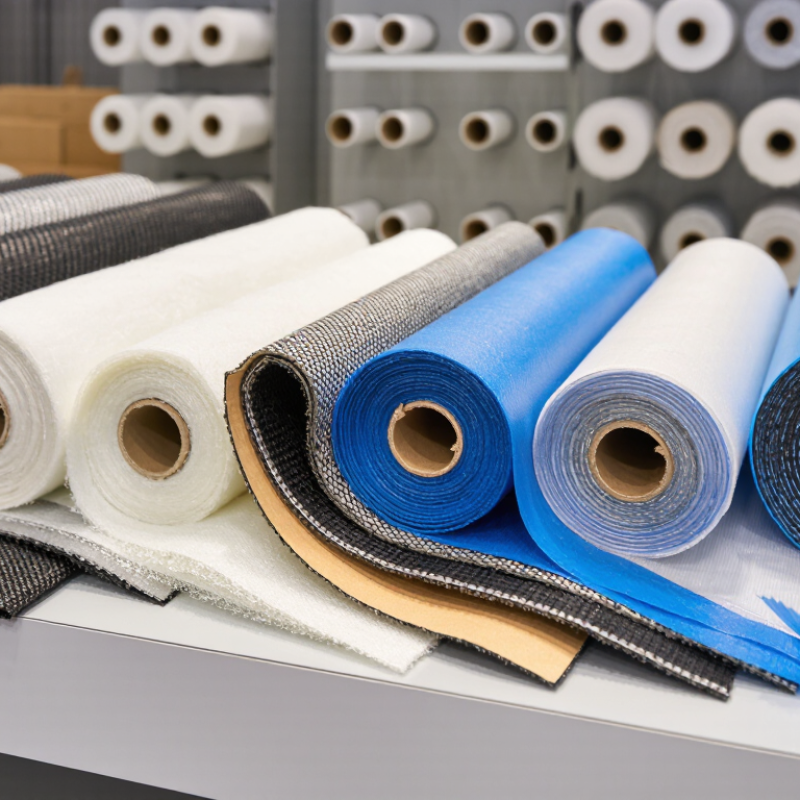
Global buyers should match geotextiles with soil, drainage, loading, and installation conditions. Woven slit-film geotextiles offer strong separation for roads and working platforms. Woven monofilament fabrics provide open apertures and reliable filtration. Woven multifilament types deliver high tensile strength under heavy loads. Nonwoven staple-fiber geotextiles are flexible and absorb installation irregularities. Nonwoven continuous-filament fabrics provide consistent filtration and good elongation.

Heat-bonded nonwovens have a firm, uniform structure for separation and filtration. Knitted geotextiles stretch easily and suit applications needing movement around irregular surfaces. Composite geotextiles combine functions, such as reinforcement and drainage, in one product. Drainage geotextiles create flow paths around foundations, retaining walls, and pipelines. Erosion-control geotextiles protect exposed soil from rainfall and surface runoff. Each type has limits. A strong fabric may still clog in fine soil.

Tips: Check tensile strength, puncture resistance, apparent opening size, and water permeability. Review test results against relevant international standards. Confirm roll dimensions and storage conditions before shipment. Field inspections matter. A sample can look suitable, yet installation damage may reduce performance. Careful soil testing remains essential, even when the project appears routine.

Applications of Geotextiles in Construction, Transport, and Environmental Projects

Top 10 Types of Geotextiles for Global Buyers

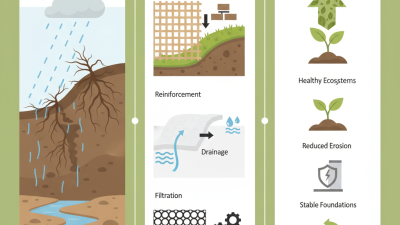
Geotextiles support construction, transport, and environmental projects through separation, filtration, drainage, reinforcement, and protection. The Federal Highway Administration identifies these five functions in HEC-23, a widely used geotechnical engineering reference. Woven geotextiles suit soil reinforcement beneath highways. Nonwoven, needle-punched fabrics filter water around drainage pipes. Knitted, composite, monofilament, multifilament, slit-film, heat-bonded, resin-bonded, and high-strength fabrics serve more specialized needs. Selection should follow soil grading, load levels, hydraulic flow, and installation conditions. A low-cost fabric can become expensive after clogging or tearing.

Transport projects often place geotextiles beneath aggregate layers. They reduce soil mixing and help maintain road thickness under repeated traffic. Grand View Research reported continued global geotextile market growth, driven partly by road, rail, and erosion-control investment. However, market growth does not guarantee performance. Poor overlaps remain a common field weakness. Construction teams should check seam strength, puncture resistance, and damage during aggregate placement. In environmental work, nonwoven fabrics can filter sediment near drainage channels, while reinforced composites protect liners in landfill and containment systems. The U.S. Environmental Protection Agency emphasizes engineered containment and leachate control, where fabric compatibility matters. Laboratory data can still miss muddy water, sharp stones, or rushed installation. On-site inspection is necessary. Sometimes, the “correct” type fails because the surrounding soil was misunderstood.

How Global Buyers Compare Geotextile Quality, Standards, and Specifications

Global buyers often compare ten geotextile types, including woven, nonwoven, knitted, composite, drainage, filtration, separation, reinforcement, erosion-control, and waterproofing fabrics. The manufacturing method affects strength, flexibility, pore size, and water flow. A woven fabric may suit soil reinforcement, while a needle-punched nonwoven often supports filtration and drainage.

Quality comparison should begin with project conditions, not price. Check tensile strength in kN/m, puncture resistance, mass per square metre, apparent opening size, and water permeability. For roads, compare separation performance under repeated loads. For drainage, examine flow capacity under pressure. Standards such as ISO, ASTM, or EN can guide testing, but buyers must verify the exact test method and edition. A familiar standard name does not guarantee equal performance. Test reports should show sample identification, production batch, laboratory details, and tolerances. Independent verification adds confidence.

Tips: Request samples from different batches. Inspect roll edges, seams, and thickness by hand. Ask how UV exposure, chemicals, and temperature changes were tested. Do not compare two products using different test conditions. Small gaps in documentation matter.

Field inspections often reveal uneven coating, weak packaging, or labels that do not match certificates. These details can affect installation and long-term durability. I have seen buyers focus on peak tensile strength, then overlook creep, clogging, or installation damage. That comparison is incomplete. A technically strong geotextile may still fail when soil grading, overlap length, or drainage pressure is ignored. Buyers should record every specification beside its test basis, because “high quality” means little without comparable evidence.

Top 10 Types of Geotextiles for Global Buyers

Typical basis-weight ranges used to compare geotextile construction, filtration capacity, separation performance, and handling requirements.

Basis weight is a practical first-screening indicator, but it does not define product quality by itself. Global buyers should also verify tensile strength, elongation, apparent opening size, permittivity, puncture resistance, UV stability, polymer type, and compliance with the required ASTM, ISO, or EN test method. The ranges shown are representative market ranges and should be confirmed against the project specification.

Key Factors for Selecting Suppliers, Products, and Cost-Effective Solutions

Top 10 Types of Geotextiles for Global Buyers

Key Factors for Selecting Suppliers, Products, and Cost-Effective Solutions

Selecting geotextiles starts with the project, not the catalog. Woven fabrics suit soil reinforcement and heavy separation. Nonwoven, needle-punched products support filtration and drainage around pipelines. Knitted, composite, and geogrid-based materials serve more specialized structures. Buyers should compare tensile strength, puncture resistance, permeability, and UV performance. A product that looks economical may fail under wet soil or sharp aggregate. It becomes expensive later.

Supplier evaluation needs practical evidence. Request recent test reports, production photos, lot traceability, and samples from the actual manufacturing line. Check whether the supplier understands your soil type, installation method, and climate. Ask about roll width, weight tolerance, packaging, minimum order quantities, and replacement procedures. Stable quality matters more than impressive promises. Delayed shipments can stop an entire site.

Tips: Test samples before bulk purchasing. Compare delivered cost, not unit price. Confirm export documents early. Keep one spare roll for inspection.

A reliable supplier should explain limitations clearly. For example, a lightweight nonwoven may drain well but lack reinforcement strength. A tightly woven fabric may separate soil effectively but reduce water flow. These trade-offs are easy to overlook during price discussions. I would also question unusually low quotations. They may reflect thinner material, weaker stitching, or incomplete testing. Sometimes the cheapest option is suitable. Often, it needs closer proof.

Top 10 Types of Geotextiles for Global Buyers - Key Factors for Selecting Suppliers, Products, and Cost-Effective Solutions
Rank Geotextile Type Typical Polymer Common Manufacturing Method Key Functional Properties Typical Applications Important Buying Specifications Indicative Bulk Price Range* Supplier Evaluation Priorities
1 Nonwoven Needle-Punched Geotextile Polypropylene or polyester Random fiber web bonded by mechanical needle punching High filtration, drainage, separation, puncture resistance, and good elongation Roads, railways, drainage layers, landfill liners, erosion control, and foundation works Mass per unit area, apparent opening size, permittivity, permeability, tensile strength, puncture resistance, and UV resistance US$0.45–1.80/m² Consistent weight, uniform fiber distribution, certified test results, roll-width accuracy, and reliable packaging
2 Woven Geotextile Polypropylene or high-density polyethylene Interlaced tapes or monofilaments woven into a regular structure High tensile strength, low elongation, strong separation performance, and good load distribution Heavy-duty roads, working platforms, embankments, haul roads, and soft-soil stabilization Machine and cross-machine tensile strength, elongation, grab strength, CBR puncture, and opening size US$0.35–1.50/m² Strength retention, dimensional stability, seam performance, project-specific design data, and quality control records
3 Woven Monofilament Geotextile Polypropylene Woven round monofilaments forming a comparatively open grid Excellent permeability, controlled filtration, tensile strength, and resistance to clogging Drainage systems, coastal protection, riverbanks, canals, and hydraulic engineering Apparent opening size, water flow rate, permittivity, tensile strength, and resistance to biological or chemical exposure US$0.70–2.50/m² Filtration compatibility with soil, aperture consistency, hydraulic test data, and resistance to installation damage
4 Geotextile Geogrid Composite Polyester, polypropylene, or polyethylene combined with geotextile fabric Geogrid bonded, laminated, or stitched to a geotextile layer Reinforcement, separation, filtration, and improved aggregate confinement in one product Paved and unpaved roads, railway subgrades, reinforced soil structures, and weak subsoil improvement Ultimate tensile strength, aperture size, junction strength, interface friction, and composite layer mass US$1.20–4.50/m² Verified reinforcement design values, junction integrity, bonding quality, installation guidance, and project compatibility
5 High-Strength Woven Geotextile High-tenacity polyester or polypropylene High-strength woven yarns or tapes arranged in a tightly controlled structure Very high tensile capacity, low creep potential, dimensional stability, and reinforcement efficiency High embankments, retaining structures, steep slopes, mining platforms, and heavy-load foundation bases Design tensile strength, allowable long-term strength, creep reduction factors, installation damage, and seam strength US$1.50–5.50/m² Long-term design calculations, creep testing, durability data, traceable raw materials, and technical support
6 Geotextile Tube Fabric High-strength polypropylene or polyester Heavy woven fabric sewn into large tubular dewatering containers High hydraulic filtration, sludge retention, tensile capacity, and large-volume containment Dredged-material dewatering, wastewater sludge treatment, coastal reclamation, and emergency flood protection Tube circumference, fabric strength, filtration opening size, seam strength, filling method, and polymer durability US$4–18/m² of fabric Hydraulic performance, seam construction, filling compatibility, project sizing, and technical installation assistance
7 Geotextile Mattress or Silt Curtain Fabric Polyester or polypropylene Woven or composite fabric assembled into flexible containment systems Sediment retention, flexibility, controlled permeability, and resistance to water movement Dredging operations, shoreline works, bridge construction, underwater protection, and sediment control Fabric permeability, tensile strength, ballast or flotation configuration, seam strength, and expected water velocity US$2–12/m² Site-specific hydraulic design, seam quality, attachment hardware, deployment method, and repair provisions
8 Filtration Geotextile Polypropylene or polyester Usually nonwoven needle-punched or woven monofilament construction Allows water passage while limiting soil migration and internal erosion French drains, subsoil drainage, pipe wrapping, retaining walls, dams, and coastal structures Apparent opening size, permittivity, permeability, soil retention criteria, clogging resistance, and puncture strength US$0.40–2.20/m² Soil-filter compatibility calculations, hydraulic test methods, installation protection, and clear product labeling
9 Separation Geotextile Polypropylene or polyester Nonwoven or woven fabric selected according to load and soil conditions Prevents mixing of aggregate and subgrade, preserves drainage, and improves pavement service life Road bases, parking areas, temporary access roads, rail tracks, and construction platforms CBR puncture resistance, tensile strength, mass per unit area, opening size, permeability, and installation survivability US$0.30–1.40/m² Compliance with project specifications, suitable strength class, roll dimensions, delivery capacity, and total installed cost
10 Erosion-Control Geotextile Polypropylene, polyester, natural fiber, or biodegradable fiber blends Woven, nonwoven, or three-dimensional open synthetic and natural-fiber structures Surface soil protection, runoff reduction, vegetation support, and temporary or permanent erosion control Slopes, channels, riverbanks, coastal areas, mine restoration, and landscape stabilization Open area, water flow capacity, tensile strength, UV resistance, biodegradation period, and anchoring requirements US$0.60–6.00/m² Climate suitability, expected service life, vegetation compatibility, anchoring design, and environmental requirements
*Indicative bulk price ranges are typical international market estimates in US dollars per square metre and may vary according to polymer type, mass, strength grade, order volume, coating, custom dimensions, testing requirements, freight, duties, and project location. Final selection should be based on site soil conditions, hydraulic requirements, design loads, installation conditions, and applicable project standards.