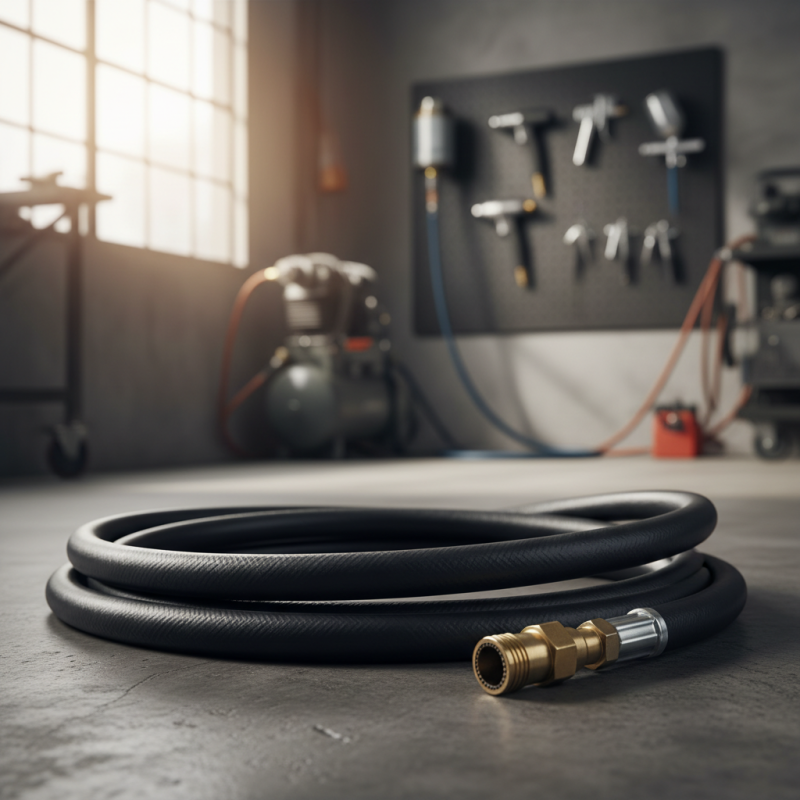
Top Tips for Choosing the Best Rubber Air Hose?
When selecting a rubber air hose, careful consideration is crucial. Recent industry reports indicate that improper hose selection can lead to efficiency losses of up to 30%. This highlights the importance of investing time in choosing the right product for your needs.
rubber air hoses are favored for their durability and flexibility. They perform well in both hot and cold temperatures, catering to various environments. Reports suggest that hoses with a higher-rated pressure capacity generally last longer, offering greater value.
However, not all rubber air hoses are created equal. Some are prone to wear and tear, especially under heavy use. Understanding your specific requirements can prevent costly mistakes. Consider factors such as hose length, diameter, and reinforcement. This reflection can lead to a more effective choice and ultimately improve your operational efficiency.
Understanding Rubber Air Hoses: Key Features and Benefits
Rubber air hoses are essential in many industries. They provide durability and flexibility. Key features include resistance to wear and weather. This makes them suitable for outdoor applications. They can withstand high pressures. In fact, many can handle pressures up to 300 PSI. This is vital for tools operating at high demands.
When choosing a rubber air hose, consider the length and diameter. A longer hose provides better reach. However, it may reduce the pressure at the tool end. Opt for a diameter that matches your compressor and tools. This ensures optimal airflow. Remember, a diameter too small can cause inefficiency.
Also, check for features like kink resistance. A hose that kinks easily can cause downtime. Look for hoses with a solid construction. These are more likely to withstand heavy use. Some reports indicate that hoses with better bend radius tend to last longer. Investing in quality maintenance can extend the hose's lifespan.
Types of Rubber Air Hoses: Choosing the Right Style for Your Needs
When selecting rubber air hoses, understanding the different types is crucial. Generally, rubber air hoses come in two major categories: heavy-duty and lightweight. Heavy-duty hoses are ideal for industrial applications. They can withstand high pressures and resist wear and tear. On the other hand, lightweight hoses are suitable for lighter tasks, like home maintenance.
Specialized hoses are also available. For instance, some are designed for specific temperatures, while others are made to work in extreme conditions. According to a report by the National Institute of Standards and Technology (NIST), improper selection can lead to a 30% increase in operational costs. It’s essential to consider your usage before making a choice.
Moreover, certain hoses have unique features. Some include components like swivel fittings that enhance maneuverability. However, these features may not be necessary for every user. Understanding your requirements will help avoid excess expenditures. A thorough assessment based on specific tasks and environment is needed to make an informed decision.
Factors to Consider When Selecting the Best Rubber Air Hose
When selecting a rubber air hose, several critical factors should guide your decision. The material quality is paramount. Rubber hoses should be resistant to abrasions and ozone damage. According to industry reports, hoses made from high-quality rubber can last up to four times longer than cheaper alternatives. Durability impacts long-term costs. A more durable hose can reduce the frequency of replacements.
Another significant aspect to consider is flexibility. A flexible air hose is easier to maneuver in tight spaces. It allows for better handling during use. Some reports suggest that flexibility impacts operational efficiency by up to 20%. Also, consider the diameter of the hose. A larger diameter can facilitate better airflow but may not fit all equipment. Assessing your specific needs will save you time and money.
Length is also an essential factor. A too-short hose limits your reach, while an excessively long hose can be cumbersome. Durability and flexibility come with trade-offs. Sometimes, a hose that offers great flexibility might compromise on durability. Finding the right balance is key. Analyzing your requirements will help in making the best choice.
Understanding Size and Length: How to Choose the Right Specifications
When selecting a rubber air hose, size and length are crucial. An optimal diameter can enhance airflow while minimizing pressure loss. Standard sizes include 1/4 inch, 3/8 inch, and 1/2 inch. According to industry data, a larger diameter can increase air delivery by up to 50%. However, too large a diameter may be unnecessary for small tools. Finding the right balance is key.
Length also plays a significant role in performance. Ideally, hoses should be as short as possible to maintain pressure. Each additional foot can reduce air pressure by 1 psi. For example, a 50-foot hose may not support tools effectively if pressure is lost. Consider the distance between your air compressor and the tools you use.
Some users opt for longer hoses for convenience, but this can lead to complications. A longer hose is heavier and may be more difficult to maneuver. Users often overlook this when choosing, leading to potential frustration. Be realistic about the working environment. Understanding these specifications ensures you'll select an air hose that fits your needs better.
Maintenance Tips for Prolonging the Life of Your Rubber Air Hose
Maintaining the integrity of your rubber air hose is crucial for optimal performance. Reports suggest that proper care can extend the hose's lifespan by up to 30%. Investing in regular inspections helps identify wear and tear before they lead to bigger issues. Look for cracks, fraying, or bulging. A small issue can quickly escalate if ignored.
Keep your hose clean and free from debris. Dirt can wear down the material over time. Regularly wipe it down with a damp cloth. Additionally, ensure proper storage when not in use. Avoid kinks or sharp bends that stress the material. Properly coiling the hose prevents these issues and keeps it in good shape.
Pressure checks are essential. Use a gauge to monitor levels regularly. Excessive pressure can damage the hose, leading to leaks. It's advised to maintain optimal levels as per your specific application. Remember, the longevity of your hose relies on these simple maintenance tips. Regular care pays off in the long run, making your equipment more reliable.